Inside NC State CMAST:
Aquaculture, Oyster Farming & the Business Behind It
My visit with Eric Herbst, Coastal Aquaculture Specialist
July 19, 2026 · Morehead City, North Carolina

A Sunday Morning at CMAST
On Sunday, July 19, I had the opportunity to visit NC State University's Center for Marine Sciences and Technology (CMAST) in Morehead City and spend the morning with Mr. Eric Herbst, Coastal Aquaculture Specialist with North Carolina Sea Grant.
Mr. Herbst met with us around 8:30 in the morning and generously spent more than three hours showing me around the facility, explaining the research and work being done, and answering my questions. I was especially grateful that he took so much time out of his Sunday to share his knowledge and experiences with me. He was incredibly welcoming and made it easy for me to ask questions as we explored different areas of aquaculture.
During the morning, I learned about oyster and clam farming, shellfish mariculture, fish hatcheries, and some of the research being done to improve aquaculture in North Carolina. What I didn't expect was how much the visit would also make me think about aquaculture as a business.

What I Learned About Shellfish Aquaculture
One of the main areas Mr. Herbst introduced me to was shellfish aquaculture. I learned more about how oysters and clams are cultivated and how researchers are working to improve the methods used to grow them.
Seeing the shellfish mariculture demonstration area helped me understand that oyster farming is much more involved than simply putting oysters in the water and waiting for them to grow. Farmers have to think about where and how oysters are grown, environmental conditions, growth and survival, equipment, and how different production methods can affect the final product.
Mr. Herbst also explained some of the challenges involved in expanding marine aquaculture. This made me realize how closely research and commercial farming are connected—scientific improvements that increase survival, efficiency or consistency can also make a real difference to the economics of an oyster farm.
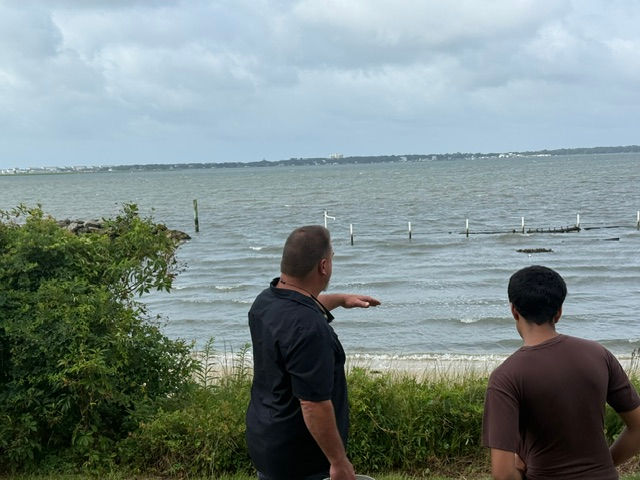
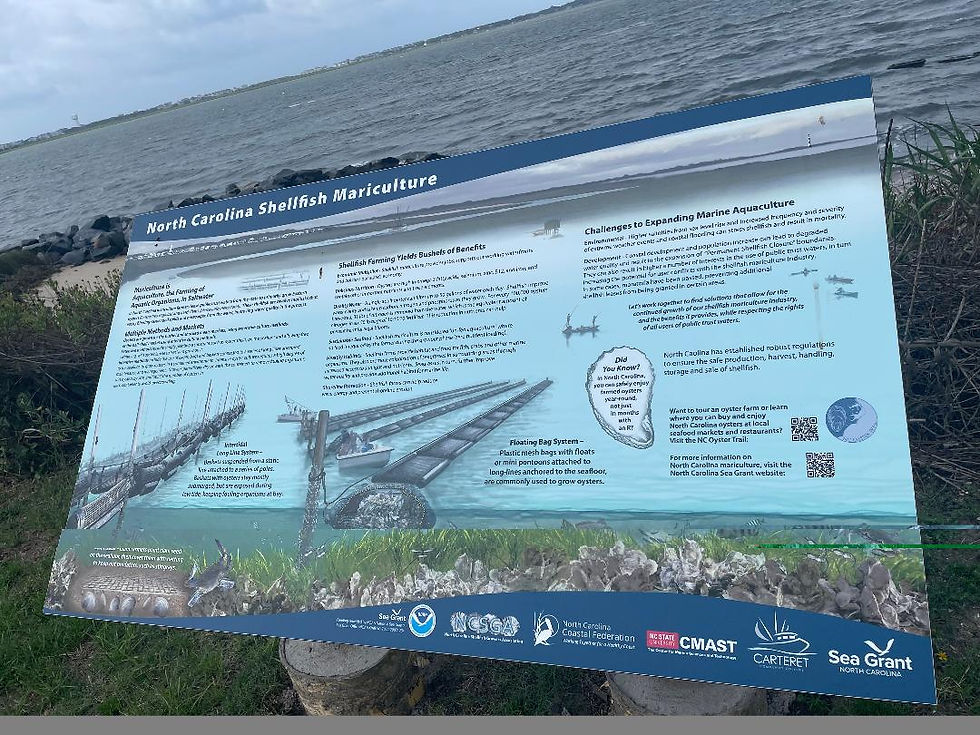
Learning about shellfish mariculture and aquaculture production along the North Carolina coast.
From Hatcheries to Research
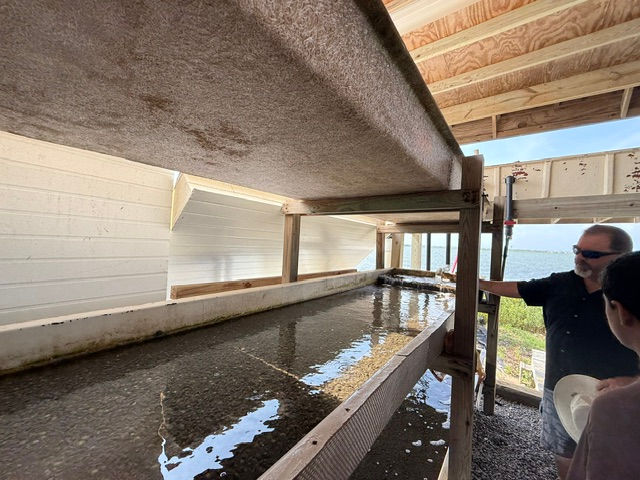


Inside CMAST, Mr. Herbst showed me more of the research and facilities that support aquaculture. I learned about fish hatcheries and how controlled environments can be used during different stages of raising aquatic species. We also discussed research involving oysters and clams and how scientists study ways to improve aquaculture production.
What stood out to me was how many different factors have to come together for aquaculture to work successfully. Biology, water conditions, equipment, animal health and survival all affect the outcome. Research can help producers understand these factors and develop better and more reliable ways to raise fish and shellfish.
This also helped me see why aquaculture research matters beyond the laboratory. Improvements in survival, growth or production efficiency can eventually affect how successfully a commercial aquaculture operation can run.
The Business Behind Oyster Farming
One part of the visit that especially interested me was thinking about oyster farming as a business. Although aquaculture is based on marine science, a commercial oyster farm also has to operate as a successful business.
Mr. Herbst also introduced me to some of the economics behind oyster farming. We discussed some of the costs involved in getting started, including leasing an area of coastal waters for an aquaculture operation, equipment and other expenses that a farmer has to consider before producing and selling oysters.
This part of our conversation was especially interesting to me because I’m interested in business and finance. It made me realize that starting an oyster farm involves many of the same questions as starting any other business:
How much capital do you need to get started?
What are your ongoing costs?
How long will it take before you can sell your product?
What risks could affect your return?
And can the business generate enough revenue to be sustainable?
Seeing aquaculture from this perspective helped me understand how marine science, entrepreneurship and finance come together. Research that improves oyster survival, growth or production efficiency isn't only scientifically important—it can potentially affect the economics of the farm as well.


My Takeaway
My visit to CMAST gave me a much broader understanding of aquaculture. I came in wanting to learn more about how fish and shellfish are raised, but I left thinking about the connections between marine science, conservation, research and business.
I especially enjoyed seeing how research can solve practical problems for aquaculture producers and how decisions about production, costs and risk can determine whether an operation is successful. It made me interested in continuing to learn about both the science of aquaculture and the business behind it.
I am very grateful to Mr. Herbst for spending nearly his entire Sunday morning with me. From around 8:30 a.m. until almost noon, he took the time to show me around, explain his work, answer all of my questions and share his knowledge about aquaculture in North Carolina. His friendliness and willingness to spend so much time helping me learn made this an experience I will remember.
A Memorable end to the viisit
At the end of the morning, Mr. Herbst showed me the crab traps that had been placed in the water and some of the crabs they had caught. Before we left, he even gave me two crab claws from one of the crabs. It was a fun and memorable way to end a morning where I had learned so much about North Carolina's coastal aquaculture.
